
Volume-proofing the candidate experience: Key takeaways from our early careers breakfast
Applications numbers are still rising, competition is increasing and AI is changing recruitment processes faster than most employers can adapt.
These were some of the themes at our recent breakfast event, in partnership with the ISE, hosted at The Ivy in Tower Bridge.
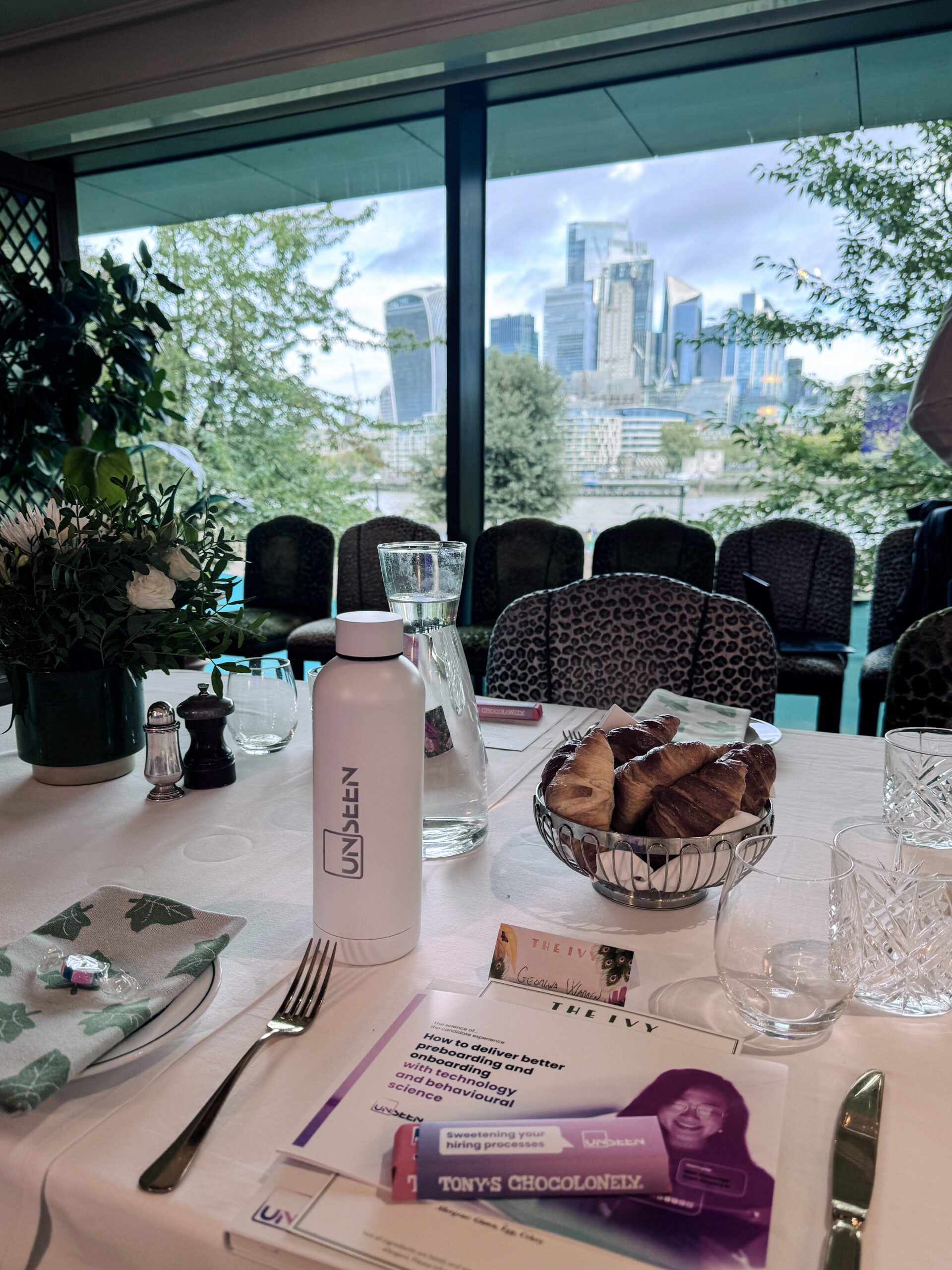
Early careers leaders from industries across Finance, Retail, Engineering and more gathered to hear the latest findings from the ISE’s 2026 Student Recruitment Survey, explore the psychology behind the candidate experience, and compare approaches with one another. It was a fantastic opportunity to compare the quantitative data against what employers are seeing in their own processes.
Read on for the key findings, the discussions around the room and how business psychology and behavioural science can help employers respond to the latest market insights.
AI is disrupting process faster than it is being adopted
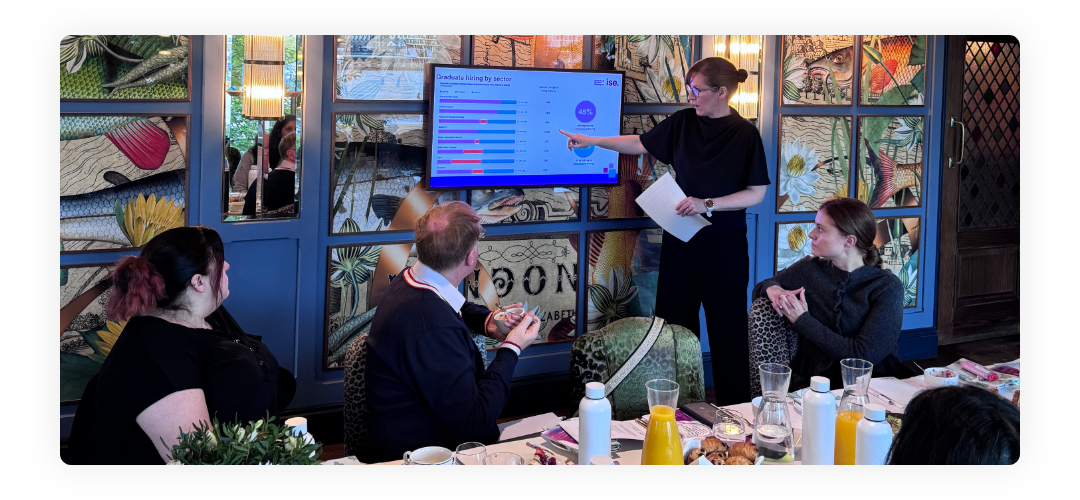
Dr Claire Tyler, Head of Insights at the ISE, presented findings from the latest Student Recruitment Survey. It drew responses from 155 employers, who received 1.7 million applications and made over 31,000 hires last year.
Employers are not managing candidate use of AI by simply adopting AI themselves. Whilst 77% are reviewing or redesigning their process as candidate use of AI climbs,, only 16% of employers use AI in recruitment today. The influence of AI is clearly extending beyond organisations actively deploying it in their recruitment process.
There’s been a significant shift in employer attitudes towards candidate use of AI, becoming more accepting that it has become part of students’ everyday lives.
64% are now comfortable with candidates using AI at some stage of the recruitment process, up from 46% last year. 82% provide guidance on how to use AI appropriately, compared with 55% in 2025.
At the same time, 92% of employers said they had encountered some form of cheating through the application and assessment process.
Discussions around the room
Where is the line on AI?
Several employers are testing and exploring using AI in recruitment rather than committing and governance is still a significant consideration for many.
There was also an interesting discussion on where automation ends and AI begins. Automation has long been part of recruitment, but now it seems the two are often being confused, with some candidates who receive automated responses assuming AI is involved. It was agreed, therefore, that the language employers use needs to be carefully considered, as well as some work from employers to increase understanding amongst candidates about the distinction between AI and automation.
Keeping assessments fair and human
Some employers have moved interviews to in-person after seeing candidates rely on AI during live conversations. Others have dropped recorded video interviews and virtual assessment centres. For both, the trade-off was cost and attendance levels. One employer reported 30% of candidates dropping out of in-person assessment centres, particularly where candidates had other offers that did not involve travel.
In a world where candidates are making many more applications than usual, it’s understood that they cannot realistically feel as strongly about every role they apply for – application volume alone does not secure the candidates employers want. Ben Williams, Chief Scientist at Unseen, took the group through the psychology behind the candidate experience and ways to improve candidate commitment throughout the process, including providing more realistic job previews, justifications of chosen assessment tools and sharing testimonials from relatable colleagues.
Ben goes into detail on the psychology and the actions employers should be taking in his recent report, The Science of the Candidate Experience.

Scaling without losing the human touch
The next biggest theme was application volume and the impact it can have on the candidate experience.
It was found by the ISE that graduate hiring is stabilising, but that the growth remains uneven. Hiring rose by 4% this year after an 8% fall last year. The contraction has stopped, but growth is not returning across the board. When they exclude the small number of very large employers from the dataset, the average change is close to zero.
At the same time, volume of applications continues to be the key issue for employers. 73% of employers expect high application volumes to be a challenge in the next recruitment season, and 60% say managing high application numbers is a top concern for the next 5 years. Application numbers are still at a record high, with 141 per vacancy overall, rising to 172 in London.
Employers are responding to this by adjusting their processes using shorter application windows, basic screening automation and limits on how many roles a candidate can apply for. Using AI to manage volumes was low down on the list of adjustments being made, ranked 10th.
Discussions around the room
Consistent communication
After hearing the data, discussions turned to how this could be put into practice, particularly at scale.
It was agreed that automated messages to candidates can still be rich, tailored and informative, even when they’re not coming from an individual. One employer shared that they use a single recruiter to record a video with updates at each stage of the process, so candidates can feel better connected and valued by seeing the same person throughout.
The challenge of keeping candidate attendance during live events was brought up once more, and some employers shared that they have moved pre-joining webinars to pre-recorded sessions after seeing candidates drop out of live events.
Ben shared how a psychologically-informed journey design can help organisations maintain candidate attention and engagement across long lead times, rather than relying on isolated moments of communication. Unseen’s candidate and onboarding experience platform, Meet&Engage, facilitates this through staged content releases, reminder emails and notifications, structured content ordering and progressive engagement over time.
Delivering feedback at scale
Only 14% of employers in the ISE survey said they provided feedback at the initial screening stage, rising to 40% at testing. One employer shared how through utilising Unseen’s Assessment Centre platform, TopScore, they were able to easily provide quality feedback at every stage of the process and rarely saw any challenge on that feedback.
Another discussion was about the value of the data collected through assessment – one employer shared how they use assessment centre data to build a candidate profile at the end of the process, and everyone was in agreement that it would be useful to be able to join up that data with candidate strengths and improvement areas later down the line once they were in role.
How we can help
Volume-proofing the candidate experience means scaling processes without diluting the journey. Everything employers do needs to centre on being clear, relevant, human and trusted.
The topics covered at the breakfast are ones we work on with employers every day, from designing assessment journeys and feedback to keeping candidates engaged between stages and planning for volume.
If your team is facing similar pressures, we would welcome a conversation. Get in touch with us to discuss how these findings apply to your early careers programme and where we might be able to help.